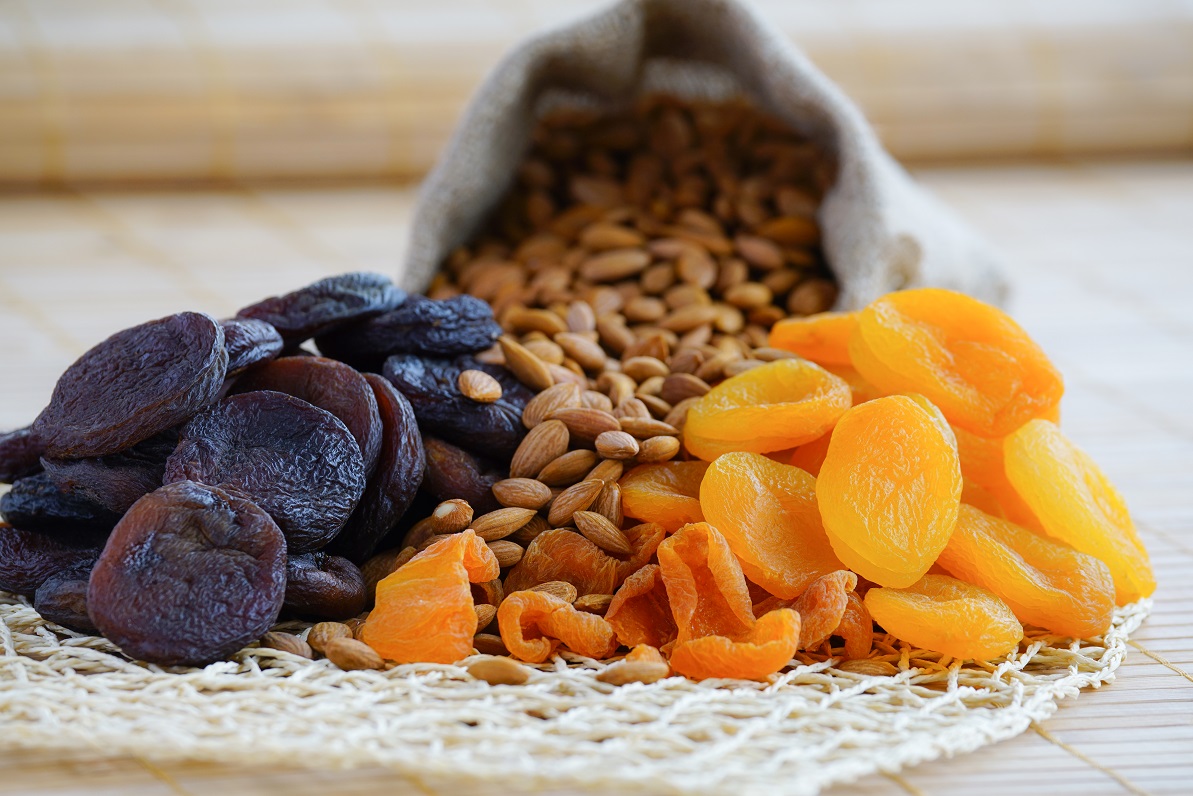
The geography, climate and labour behind a flavour unmatched anywhere in the world.
The Secret of Uniqueness
Why is the Malatya apricot number one in the world?
A large share of the world's dried apricot production comes from Malatya. We believe this is no coincidence — it is nature's gift combined with mastery passed down through generations.
Climate
Hot, dry summers and cold winters. This continental climate naturally concentrates the apricot's sugar and aroma.
Altitude
Around 900–1000 metres of altitude, with day-night temperature swings, gives the apricot its distinctive texture.
Soil
The mineral-rich alluvial soils around the Euphrates raise the apricot's nutritional value.
Aroma & Sugar
High sugar content and intense aroma make the Malatya apricot the most delicious apricot in the world.
Varieties
Malatya Apricot Varieties
Drying, table and dried-apricot types — each with its own taste and use. Click a variety for details.
Around 90% of the apricots produced in Malatya are of this variety. With its high sugar content, fleshy texture and sweet kernel, it is indispensable for both the domestic and export markets.
Spreading quickly across Malatya in recent years, Kabaaşı is known for its large fruit and late flowering, which makes it less affected by spring frosts.
An EU- and Türk Patent-registered geographical indication
Thanks to its unique geography, the Malatya apricot is not just a product but a registered value. It is registered as a geographical indication by both the Turkish Patent and Trademark Office and the European Union. This registration is the official guarantee that the product genuinely belongs to Malatya and meets specific quality standards.
Registered Geographical Indication
85–90%of world dried apricot output is from Malatya
676k tonsMalatya annual apricot output (TÜİK)
8 million+apricot trees in Malatya
EU + TÜRKPATENTRegistered geographical indication
Official Document
Geographical Indication Certificate
You can view or download the geographical indication registration certificate of the Malatya apricot below.
National GI registration: 2001 · EU registration: 2017
History
The apricot's thousand-year journey
The apricot's homeland is Central Asia (East Turkestan) and China. Reaching Anatolia along the Silk Road, the apricot achieved its finest quality in the world in Malatya's unique climate and soil.
Homeland
Central Asia (East Turkestan) and China — where the apricot first grew.
Silk Road
The apricot was brought to Anatolia along the Silk Road.
National (2001) and European Union (2017) geographical indication registrations were obtained.
A Difference Worth Knowing
Sulphured & Unsulphured (Sun-Dried) Apricots
Sulphured dried apricots are treated with sulphur dioxide to keep their bright orange colour; they offer a softer texture and a longer shelf life. This is the most preferred form on the world market.
Unsulphured (sun-dried) apricots are dried directly in the sun with no additives. Their colour turns dark brown and their taste is more intense and caramel-like. They are the favourite of those who prefer fully natural nutrition.
Sun-dried: additive-free, 100% natural
Sulphured: bright colour, soft texture
Both available wholesale, retail and packaged
Guidance and pricing tailored to your needs
Distinctive Features
What makes the Malatya apricot different?
High sugar, low acid content
High taste index (80–120); in other apricots this is between 10–40
Suitability for drying: 1 kg of dried apricot from 3.5 kg of fresh fruit
A unique aroma; it does not easily adapt to other regions
Nutritional value of 100 g dried apricot
Energy241 kcal
Dietary fibre14.3 g
Potassium1162 mg
Vitamin A3604 IU
Kaynak / Source: Asma, 2011
Comparison
Malatya apricot vs. other apricots
Feature
Malatya Apricot
Other Apricots
Taste
Intense, naturally sweet, balanced aroma
Duller, inconsistent
Texture
Meaty and soft
Often dry and fibrous
Nutrition
High in fibre, potassium, iron, vitamin A
Generally lower
Sugar Content
Naturally high
Low / variable
Shelf Life
Long, well preserved in proper conditions
Shorter
Sun-Dried Option
Available (additive-free)
Rare
Which apricot suits you? Let's find out together
Sulphured or sun-dried, wholesale or retail — tell us what you need and we'll share the right product and price.